
Why Do Caskets Fill With Water?
You’re choosing a casket for someone you love. The funeral director mentions a rubber seal, and you wonder what it protects. Rain or groundwater can collect in a casket when the water reaches a gap in the lid or shell. The amount of water depends on the burial site, the casket’s condition, and any outer container that surrounds it.
Where the Water Comes From
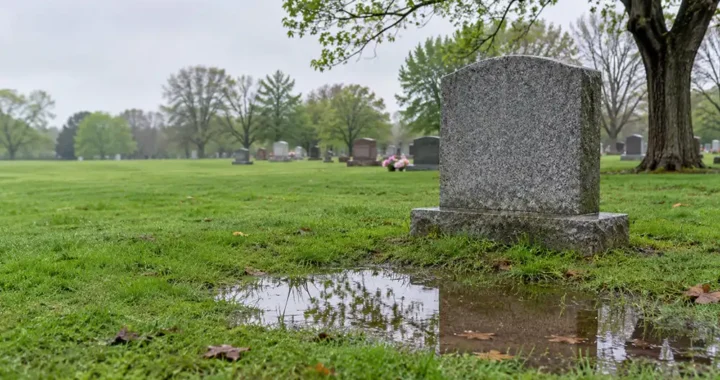
Rain can leave pudles on the grass, but some of that water seeps into the soil. Groundwater is the water that fills spaces in soil and rock beneath the surface. The top of that soaked zone is called the water table. Heavy rain can make it rise. If the water table reaches the depth of a grave, water can seep through the sides and botom of the grave.
The shape of the land and the soil affect drainiage. Clay can slow the flow of water. Picture two graves in the same cemetery. One plot sits on a slope with a drain. The other lies in a dip that catches runoff from the slope. The same storm can leave those two plots with different amounts of water in the soil.
That’s why cemetery planners pay attention to the land as well as grave depth. The Environment Agency in England advises existing cemeteries to place the base of each grave at least one meter, or about 3.3 feet, above the highest groundwater level expected each year. The guidance aims to protect groundwater from pollution. It gives cemetery staff a way to check whether a site has enough dry soil beneath a grave.
How Water Gets Into a Casket
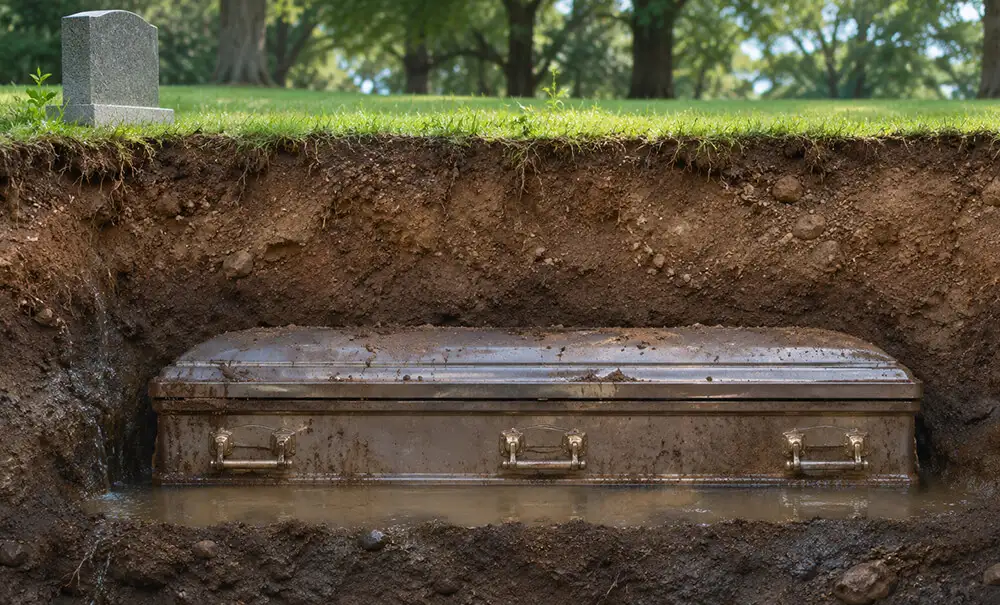
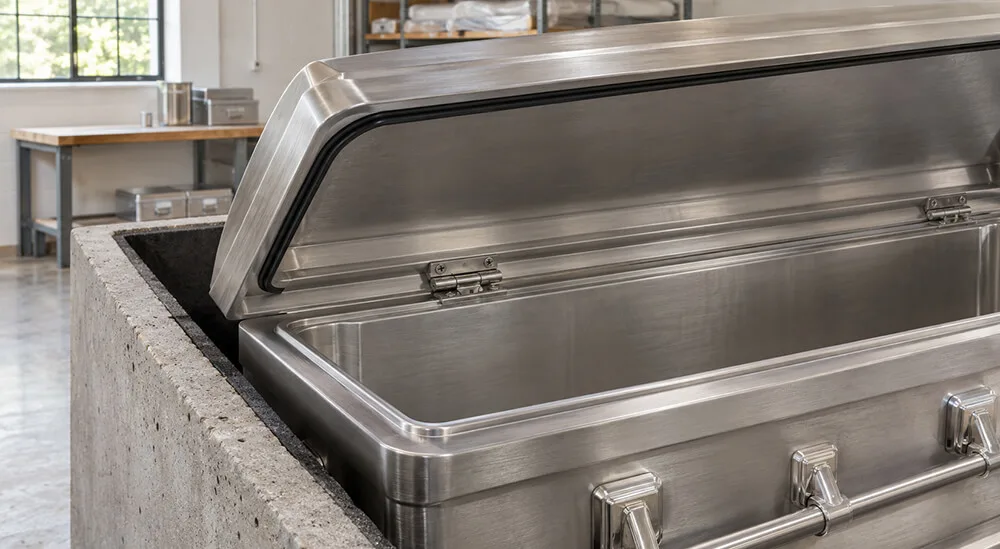
Think of a casket lid and the rim it rests on. If there’s a gap where the two meet, water can pass through. Cracks and rust holes can provide other paths. Some mettal caskets have a ruber gasket, a strip that fits between the lid and rim. It’s designed to slow water entry. Its condition matters. A torn gasket can leave an opening even when the lid is shut.
A puddle tells you something about the surface of a grave. You can’t use it to tell whether the casket has taken on water. A grave can hold water around a casket with an intact shell and seal.
What a Grave Liner or Burial Vault Does
A grave liner supports the soil above the casket and helps keep the ground from sinking. Many liners are made of concret. The liner used at New Jersey’s Doyle Veterans Memorial Cemetery has no watertight seal. Some burial vaults have a lining and a sealed lid. They’re built to bear the presure of the soil and resist water entry. Ask what the manufacturer’s waranty covers if water resistance matters to you.
What One Louisiana Family Saw
The 2016 floods disturbed nine graves belonging to Emily Dalfrey’s family at Niblett’s Bluff Cemetery in Vinton, Louisiana. Floodwater carried some of the caskets into her yard across the street. Calcasieu Parish’s recovery plan covered displaced caskets and vaults that had shifted with their seals intact. The dammage left some familes facing a second burial for someone they had laid to rest.
Questions to Ask the Cemetery
You’ve seen the casket. Ask the cemetery about the plot. Does this section collect water? Has it flooded? Does the cemetery require a liner or a vault? The staff can tell you which models they’ll accept. Ask the funeral director what each option costs and what protection it offers. You’ll have the details you need to compare them. You don’t have to guess what a label like “protective” means.