
How Does the Type of Casket and Burial Method Affect the Preservation of an Embalmed Body?
Table of Contents
When families make funeral arrangements, they often wonder how long their loved one’s body will be preserved after burial. It’s a deeply personal question that touches on our desire to honour the deceased with dignity and care. In reality, preservation depends on several factors. The type of casket and the burial method both play key roles, alongside embalming itself.Understanding these elements can help families make choices that align with their values, beliefs, and practical considerations.
Understanding the Embalming Process
Embalming is a preservation technique that temporarily slows decomposition by replacing bodily fluids with chemical preservatives. The primary chemical used is formaldehyde, typically at a concentration of 5-15% in the embalming fluid. According to the British Institute of Embalmers (BIE), modern embalming can preserve a body for viewing purposes for several days to weeks, but it’s not designed for indefinite preservation.
The process involves arterial injection, where embalming fluid is pumped through the circulatory system, and cavity treatment, where internal organs are treated with concentrated preservative chemicals. The National Funeral Directors Association (NFDA) notes that proper embalming technique is fundamental, but what happens after burial depends significantly on external factors like casket construction and burial environment.
It’s important to understand that embalming merely delays natural decomposition rather than preventing it entirely. Once the body is buried, the effectiveness of embalming chemicals gradually diminishes as environmental conditions, moisture levels, and microbial activity begin their natural work.
How Different Casket Materials Impact Preservation
The casket material dramatically affects how quickly decomposition proceeds after burial. Metal caskets, particularly those made from steel or bronze, create different preservation conditions compared to wooden caskets.
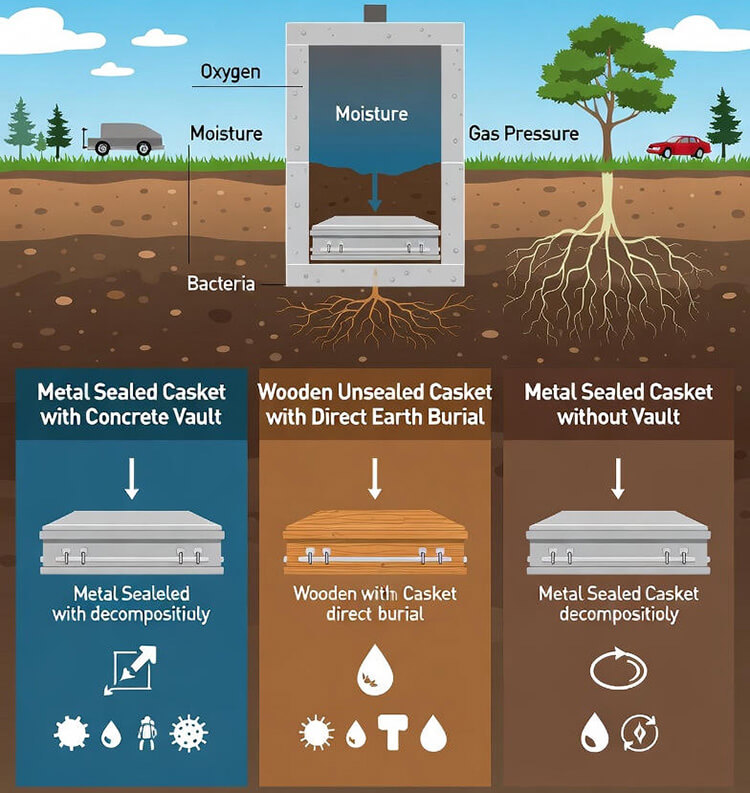
Metal Caskets (Steel, Bronze, Copper): These caskets offer the highest level of protection from external elements. Steel caskets with rubber gaskets create a sealed environment that significantly slows oxygen exchange and moisture intrusion. The Casket and Funeral Supply Association of America (CFSA) reports that sealed metal caskets can maintain relatively stable internal conditions for months or even years, depending on burial vault usage and soil conditions.
Bronze and copper caskets resist corrosion far better than steel, potentially maintaining their integrity for decades. However, this creates what’s known as an anaerobic environment (lacking oxygen), which can paradoxically lead to different decomposition patterns. Without oxygen, aerobic bacteria cannot function, but anaerobic bacteria may still cause breakdown, often producing liquefaction rather than desiccation.
Wooden Caskets: Traditional wooden caskets, whether made from pine, oak, mahogany, or other woods, are more permeable than metal alternatives. They allow gradual moisture exchange with the surrounding soil, which typically accelerates decomposition. The International Cemetery, Cremation and Funeral Association (ICCFA) indicates that bodies in wooden caskets generally decompose faster than those in sealed metal caskets, with the process taking anywhere from several months to a few years for significant decomposition to occur.
Interestingly, some families prefer wooden caskets precisely because they allow for more natural decomposition, aligning with environmental or religious beliefs about returning to the earth. Hardwoods like oak decompose more slowly than softwoods like pine, adding another variable to preservation timelines.
Biodegradable and Alternative Materials: Increasingly popular are caskets made from bamboo, willow, cardboard, or other biodegradable materials. These are designed specifically to decompose quickly alongside the body, typically breaking down within months to a year. For families choosing natural or green burial options, these materials facilitate rapid return to the soil while still providing dignified containment during the funeral service.
Burial Methods and Their Effects on Decomposition
Beyond casket choice, the burial method itself profoundly influences preservation outcomes. The three primary methods are traditional burial with a vault, burial without a vault, and above-ground entombment.
Traditional Burial with Burial Vault: Many cemeteries require burial vaults or grave liners—concrete or metal structures that house the casket underground. According to cemetery management guidelines from the ICCFA, vaults serve primarily to prevent ground subsidence, but they also create an additional barrier against water, soil pressure, and environmental intrusion.
A sealed concrete vault combined with a sealed metal casket creates one of the most protected burial environments available.Studies by forensic anthropologists indicate that in such conditions, embalmed bodies can remain relatively intact for years or even decades, though true preservation varies based on multiple factors. The vault essentially creates a “double seal” that minimizes moisture intrusion and maintains more stable temperature conditions.
Direct Earth Burial (No Vault): In jurisdictions where vaults aren’t required—common in the UK, Australia, and many parts of Europe—caskets are placed directly in the soil. This method allows moisture, soil microorganisms, and groundwater to interact more directly with the casket and its contents.
Without a vault, even metal caskets eventually corrode, and wooden caskets deteriorate relatively quickly. The Soil Science Society notes that soil composition, drainage, and water table depth all influence decomposition rates. Bodies buried in well-drained, sandy soil typically decompose faster than those in clay-heavy soil, which retains more moisture but has poorer oxygen circulation.
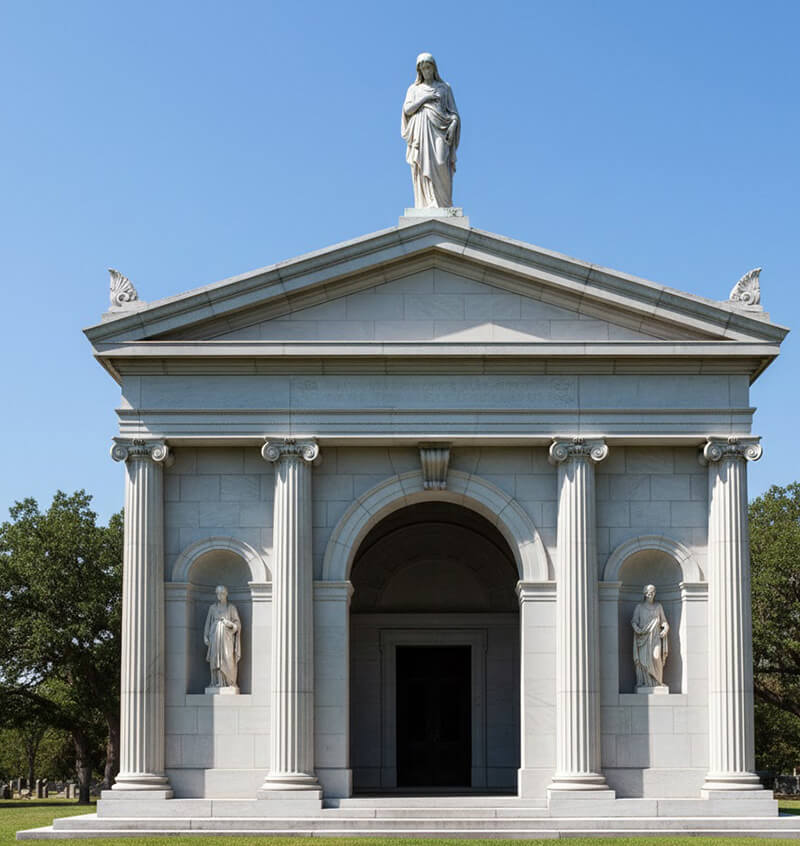
Above-Ground Entombment (Mausoleums): Mausoleum entombment places caskets in crypts above ground, creating entirely different preservation conditions. These structures protect from moisture and soil bacteria but may experience temperature fluctuations.
The National Funeral Directors Association indicates that properly sealed crypts in climate-controlled mausoleums offer some of the best long-term preservation conditions available. However, if ventilation is inadequate or seals fail, decomposition can proceed with unpleasant consequences. Many modern mausoleums include ventilation systems specifically designed to manage this issue.
Environmental Factors That Influence Body Preservation
Even with the best casket and burial method, environmental conditions play an enormous role in determining preservation outcomes. Temperature, moisture, soil composition, and geographic location all matter significantly.
Temperature: Decomposition slows dramatically in cold environments and accelerates in warm ones. Research from forensic taphonomy studies shows that for every 10°C increase in temperature, decomposition rates roughly double. This explains why bodies buried in northern climates with frozen winters may preserve longer than those in tropical regions, even with identical casket and burial methods.
Moisture Levels: Water is essential for most decomposition processes. Extremely dry environments, such as desert regions, can lead to natural mummification, even in simple caskets. Conversely, waterlogged soil creates anaerobic conditions that produce saponification—a process where body fat converts to a waxy substance called adipocere, which can preserve soft tissue features for years.
The Water Table (WT) depth matters enormously. Burials above the WT in well-drained soil decompose very differently from those below it in saturated conditions. Cemetery regulations often specify minimum depths above the water table precisely to manage decomposition and protect groundwater quality.
Soil pH and Composition: Acidic soil (low pH) generally accelerates decomposition of both bodies and caskets, while alkaline soil may slow it. Clay soils retain moisture but limit oxygen penetration, while sandy soils drain well but expose remains to more oxygen and microbial activity.
Real-World Examples from Around the Globe
Understanding theory is valuable, but real-world examples illustrate how these factors work together in practice. Two cases from different parts of the world demonstrate the significant impact of casket choice and burial method on preservation.
The Italian Cemetery Relocation Project: In 2015, authorities in northern Italy needed to relocate a historic cemetery that had operated for over a century. During exhumation, forensic teams documented the condition of remains buried between the 1920s and 1990s. Their findings provided fascinating insights into preservation patterns.
Bodies buried in sealed lead-lined caskets—a practice once common for wealthy families—showed remarkable preservation even after 50-70 years. One case from 1948 revealed soft tissue and facial features still recognizable, though discoloured. The lead lining had prevented moisture intrusion so effectively that decomposition had slowed to a crawl despite the temperate Italian climate.
In contrast, bodies from the same era buried in simple wooden caskets without embalming had decomposed almost completely, leaving only skeletal remains and fragments of clothing. Even embalmed bodies in wooden caskets from the 1960s and 1970s showed advanced decomposition with minimal soft tissue preservation.
Most interesting were the caskets buried in the cemetery’s older section, where no burial vaults were used. These wooden caskets, even thick oak ones, had deteriorated significantly, allowing direct soil contact. The research team noted that regardless of initial embalming quality, direct earth burial in wooden caskets resulted in near-complete decomposition within 30-40 years in that specific soil and climate.
The Australian Bushfire Cemetery Case: Following devastating bushfires in rural Australia in 2009, several cemeteries experienced partial collapse of burial sections due to ground instability. During restoration work in 2011, cemetery workers and forensic experts had unexpected opportunities to observe burial preservation in Australia’s unique climate conditions.
One particularly informative case involved graves from the 1980s. Bodies buried in the cemetery’s higher, better-drained sections in steel caskets with rubber gaskets showed significantly better preservation than those in lower, moisture-prone areas. A steel casket from 1984 retrieved from the higher ground still contained recognizable remains with some preserved tissue, despite Australia’s generally warm climate.
However, even high-quality metal caskets in the cemetery’s lower section—where the water table was higher—showed advanced corrosion after just 20-25 years. Several had rusted through entirely, allowing moisture and soil to enter. Bodies in these compromised caskets had decomposed much more rapidly, demonstrating how environmental conditions can overwhelm even the best casket materials.
The Australian case also revealed interesting data about the region’s red clay soil, which had a preservative effect in some instances. Bodies buried in wooden caskets in this clay-rich environment showed slower decomposition than expected, with some soft tissue preservation even after 15-20 years. Researchers attributed this to the clay’s ability to create semi-anaerobic conditions while absorbing and neutralizing decomposition byproducts.
Scientific Perspective: According to the International Journal of Legal Medicine (IJLM), these real-world observations confirm laboratory findings: preservation is never about a single factor but always a complex interaction between embalming quality, casket construction, burial method, and environmental conditions. No casket, regardless of cost or quality, can guarantee indefinite preservation without controlling environmental variables.
Making Informed Choices for Your Loved Ones
When families must choose caskets and burial methods, understanding preservation realities helps align decisions with values and expectations. Here are key considerations based on current evidence and industry practices.
If Maximum Preservation is the Goal: Choose a sealed metal casket (preferably bronze or copper for longevity) combined with a sealed burial vault. Opt for above-ground mausoleum entombment if available and within budget. Ensure quality embalming by an experienced professional. These choices, particularly in favourable climate conditions, offer the best chance of extended preservation, potentially maintaining recognizable features for decades.
However, families should understand that even with these measures, true indefinite preservation is not achievable. The Environmental Protection Agency (EPA) and funeral industry organizations caution against marketing claims that any casket or vault can “preserve forever.”
If Natural Decomposition is Preferred: Many families today embrace the philosophy of returning to the earth naturally. For these families, biodegradable caskets made from sustainable materials like willow, bamboo, or cardboard provide dignified containment while facilitating natural processes. Direct earth burial without vaults further supports this approach.
Green burial grounds, which prohibit embalming chemicals, metal caskets, and concrete vaults, represent the fastest-growing segment of the funeral industry in many countries. The Green Burial Council (GBC) certifies cemeteries that support natural decomposition, recognizing that allowing bodies to return to soil quickly can be meaningful for environmentally conscious families.
Balanced Approach: Most families fall somewhere between these extremes. A quality wooden casket provides dignity and some protection while allowing gradual, natural decomposition. This middle path respects both the immediate need to treat the body with care and the eventual reality of returning to nature.
When making choices, consider discussing with funeral directors about local soil conditions, cemetery requirements, and climate factors. Ask specific questions: Does the cemetery require vaults? What’s the water table depth? What have they observed about preservation in their specific location? Honest professionals will provide realistic expectations rather than promises they cannot keep.
Religious and Cultural Considerations: Many traditions have specific preferences regarding preservation. Some faiths embrace rapid return to earth, while others value extended preservation for religious reasons. Jewish and Muslim traditions typically favour rapid burial without embalming, often using simple wooden caskets that facilitate quick decomposition. Some Christian denominations value preservation for potential future resurrection of the body, leading families toward more protective casket options.
Understanding your family’s values, religious obligations, and practical concerns should guide these decisions more than marketing materials or pressure from any particular source.
Financial Realities: Preservation-focused choices typically cost significantly more than natural options. Premium metal caskets can range from £2,000 to £10,000 or more, while simple wooden caskets may cost £500-£2,000, and biodegradable options £200-£800. Burial vaults add another £800-£3,000. Mausoleum crypts often cost several times more than ground burial plots.
Families should carefully consider whether extended preservation justifies these additional costs, especially given that even the most expensive options only delay rather than prevent eventual decomposition. For many, investing in meaningful memorial services, charitable donations in the deceased’s name, or family support provides more lasting value than expensive burial containers.
The relationship between casket type, burial method, and body preservation is complex but understandable. Metal caskets with burial vaults offer maximum short-to-medium term preservation, particularly when combined with quality embalming and favourable environmental conditions. Wooden caskets allow moderate preservation while facilitating eventual decomposition. Biodegradable materials support rapid, natural return to earth.
Ultimately, no combination of products or methods can preserve a body indefinitely. Nature will eventually reclaim what we bury, regardless of how much we spend or what materials we choose. This reality needn’t be frightening or sad—for many, it represents the natural order of life and death, a cycle that connects us to everyone who has come before and will come after.
The most important decision isn’t about achieving maximum preservation but about choosing what feels right for your family’s situation, values, and the memory you wish to honour. Whether you select a simple pine box or an elaborate bronze casket, what matters most is that your choice reflects thoughtfulness, dignity, and genuine care for the person who has passed.
Choose Quality Caskets That Honour Your Loved Ones
As professional casket manufacturers and wholesalers, we understand that choosing the right casket is about more than preservation—it’s about providing dignity, respect, and peace of mind during one of life’s most difficult moments.
Whether your family prefers traditional metal caskets, beautiful wooden options, or eco-friendly biodegradable alternatives, we offer high-quality craftsmanship at wholesale prices. Our experienced team works with funeral homes and families worldwide to provide caskets that meet your specific needs, budget, and values. Contact us today to learn how we can serve you with compassion and professionalism.