
Is It Cheaper to Be Buried in a Mausoleum or in the Ground?
📋 Table of Contents
Introduction
It is one of the most distressing considerations for families when planning end-of-life arrangements. when families ask themselves this question — “Is burial in a mausoleum or in the ground less expensive?” they actually challenge one of the very deep personal aspects: the discussion is not solely financial but also rather cultural, religious, and in family traditions. Depending on where you live / depending on the country or region, what kind of services you involve, and how you intend to honor your dear ones, the answers will differ.
According to global funeral industry studies, funeral practices in the world have changed significantly in the last century, and the cost has increasingly become a considerable factor for families worldwide. Nowadays, funeral expenses in many countries have become a financial burden, with costs ranging from a few hundred to tens of thousands of dollars.
Understanding the Two Options
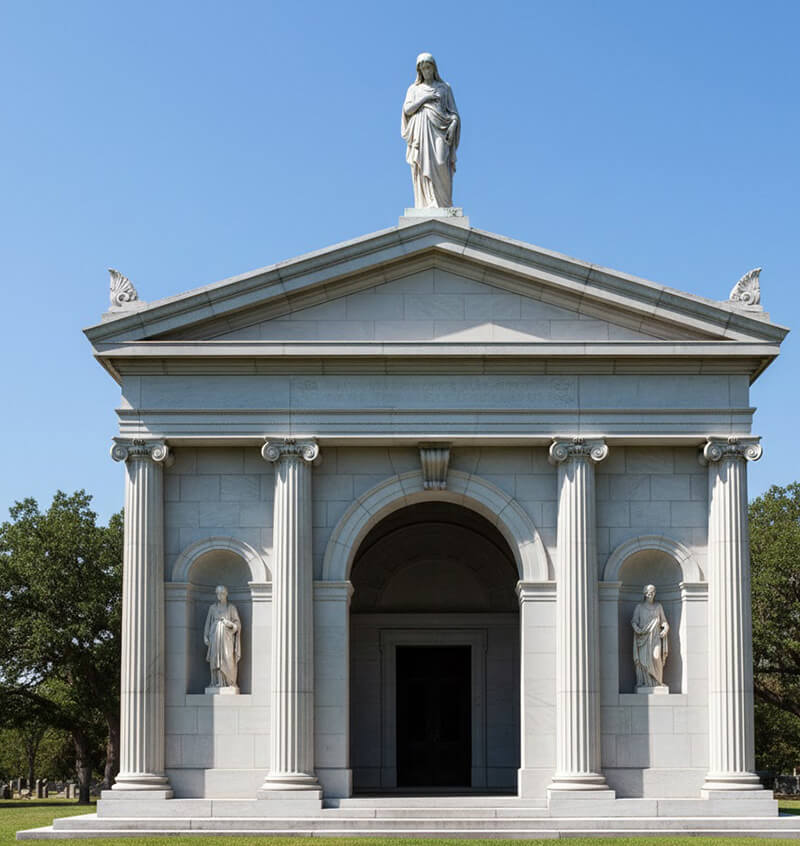
First, before jumping into costs, let us know what each option includes. A mausoleum is an above-ground structure built for entombment of the deceased, having individual compartments or “crypts,” each of which is designed for placement of caskets or urns. These may either be private family mausoleum types or community mausoleums, which are a shared space for multiple families. Generally, mausoleums are built with granite, marble, or concrete materials that provide a permanent site of rest and that resist weather damage.
Ground burial refers to a grave dug in the earth in a cemetery plot. This type of burial is traditional but it is found in many parts of the world to require some burial vault or grave liner to keep the ground from settling. It includes digging, placing the casket within the grave, backfilling, and erecting a headstone or marker at the grave.
In many developed countries, the average cost of a funeral with burial worldwide is around $3,000 to $15,000, depending on the country and services selected (NFDA – National Funeral Directors Association).
Cost Comparison Around the World
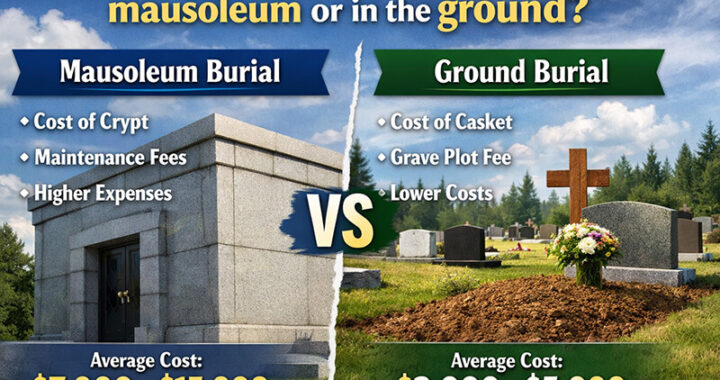
The cost difference between mausoleum and ground burial varies significantly from country to country. Most times, mausoleum entombment proves costlier initially, but this does not hold true for all cases. We can list out the average costs:
Mausoleum Burial Costs:
- Crypt purchase: $2,000 – $25,000+ (USD)
- Entombment fee: $500 – $2,000
- Memorial plaque: $200 – $1,500
- Maintenance fees: Often included or minimal
Ground Burial Costs:
- Cemetery plot: $1,000 – $10,000+
- Grave opening/closing: $800 – $3,000
- Burial vault: $700 – $4,000
- Headstone: $1,000 – $10,000+
- Ongoing maintenance: $50 – $500 per year
In countries like the UK (United Kingdom), traditional ground burial in private cemeteries can exceed £15,000. The same trend can be observed as evidenced by the fact that most of the EU (European Union) member states ground burial is cheaper than mausoleum burial.
Real-Life Examples from Different Countries
To fully understand the human aspect behind the decision, let’s explore how families in different countries made their choices.
Maria, Italy: When Maria’s grandmother passed away in Rome, the family was faced with a difficult choice. A traditional ground burial in the family plot would have been about €4,500, including the plot fee, excavation, vault, and a modest headstone. However, the cemetery also offered community mausoleum crypts for €6,800. The family chose the mausoleum despite the higher initial cost because summers in Italy are scorching, and they were worried about the upkeep of ground burial. “We visit nonna every week,” says Maria. “The mausoleum is always cool and clean, and we don’t have to worry about the grave sinking or overgrown grass.”
The Chen Family in Singapore: Singapore is distinctly challenged due to its land scarcity. Upon the passing of Mr. Chen’s father, the family learned that traditional ground burial plots at government cemeteries cost about SGD $9,000 (Singapore Dollars) with a 15-year lease—after which remains must be exhumed. A niche in a columbarium (cremation-related mausoleum comparison) was just SGD $3,200 and, more importantly, had no time restrictions. “The choice was apparent to us,” Chen recalled. “The permanent columbarium niche was not only cheaper but also gave us peace of mind that dad’s resting place wouldn’t be disturbed.”
In Japan, where land is scarce, mausoleum-style burials in the grounds of temples can be priced between ¥1,000,000 and ¥3,000,000 (JPY – Japanese Yen), which actually competes with ground burial when considering the cost of perpetual care.
The Rodriguez Family in Mexico: The burial of their father in Guadalajara was planned, and the Rodriguez siblings were surprised to learn that ground burial was a far cheaper option. For a cemetery plot with perpetual care, one would pay about MXN 35,000 (Mexican Pesos); a mausoleum crypt in that very same cemetery would cost MXN 95,000. “We’re a big family,” stated oldest son Miguel. “We knew that we would maintain the grave ourselves. Ground burial made more financial sense, and this way we could afford a beautiful headstone with the money we saved.”
Australian Perspective – The Thompson Family: In Sydney, Sarah Thompson’s mother specified cremation and mausoleum burial especially after visiting her friend’s overgrown grave. The family paid AUD $12,000 (Australian Dollars) for a crypt in a community mausoleum, which was approximately AUD $8,500 less than ground burial (including plot, digging, vault, and headstone). “Mum hated the idea of being underground. For the extra expense, she got peace of mind and, honestly, every time we go, the mausoleum is pristine. We haven’t spent a dollar on maintenance in five years.”

Hidden Costs and Long-Term Expenses
The tip of the iceberg There are more potential hidden costs involved in both so as to add to the total costs over time.
In perpetual care fees attached to ground burial: usually mandatory one-time, from $500 to $2000, or from $50 to $300 annually, cover mowing grass and general landscaping upkeep, but not always everything; foundation repairing settling headstones can cost between $200 and $800, and families usually have an additional expense for flowers, decorations, and seasonal maintenance.
Mausoleums would typically have at least some form of maintenance built in the initial purchase price or as part of a smaller annual fee. Also, as reported by the ICCFA (International Cemetery, Cremation and Funeral Association), mausoleums that are properly maintained require little ongoing investment from the families. However, other countries, particularly within SA (South America), face the challenge of aging mausoleums requiring structural repairs, which can incur thousands of dollars in expenses to families.
Compare cost in total expense over 20 years, not just upfront cost. A ground burial may look less expensive than a mausoleum, but in 20 years maintenance, headstone repairs, and perpetual care fees might make it more costly.
Cultural and Religious Factors
Cost is only a small consideration. Through culture and religion, burial choices are often influenced by culture and religion rather than cost, and price, even secondary. In many Middle Eastern countries, Islam requires that ground burials be performed as soon as possible, mostly within 24 hours after death; mausoleum burial is simply not an option for observant Muslims, thus rendering comparison irrelevant.
Southeast Asian countries such as South Korea might find this group interesting, as Confucian traditions in bygone times required elaborate ground burials on family land, but modern laws and space restrictions have compelled the majority to choose mounting spaces. Furthermore, nowadays, the government promotes cremation and mausoleum-style columbariums, subsidies to make these options cheaper than traditional underground burial.
Above-ground burial found its way historically into the Philippines from Spanish colonial influence. For many Filipino families, mausoleums serve as status symbols, and they may spend premium rates—sometimes 3 to 4 times the amount of cash needed for ground burial—on fancy family crypts. “It’s not about the money,” explains Manila resident Teresa Santos. “Our family mausoleum represents generations of our history. It’s where we gather on All Saints’ Days (ASD) to celebrate our ancestors.”
Practical Considerations for Families
Apart from costs and culture, practical considerations should veer your decision. Weather could be one of those influences. In regions of high water tables or floods, ground burial becomes a problem. The Netherlands and parts of Bangladesh are some examples. Damage due to water infiltration occurs to caskets and vaults, which will require costly repairs. This is not to say that mausoleums are inexpensive, but in those regions, they offer better long-term returns.
Accessibility is also important for elderly members or anyone with mobility difficulties. Generally, mausoleums tend to provide easier access facilities with flat paved walkways while ground burials might require a person to walk through uneven ground. This was where the Patel family in Mumbai drew the line. “My mother uses a wheelchair. Visiting my father’s mausoleum crypt is simple for her. If we’d chosen ground burial in that hilly cemetery, she couldn’t pay her respects.”
An FCA (Funeral Consumers Alliance) study found that those families who closely examined all of the prices, including the projected maintenance in 10 years, were said to have made choices that resulted in higher satisfaction regardless of the chosen option.
This factor also links to the number of visits made by families. Larger families with many graves frequently visited might prefer mausoleums with those attributes of weather protection and cleanliness rather than those ground burial offers in practicality. Those might be blended with small families still able to find ground burial’s lower initial expense more practical without access to burial sites.
Conclusion
Is it less expensive to be buried in a mausoleum than in the ground? The honest answer is: it depends. Generally, above-ground burial in a mausoleum is expensive. The typical cost of an underground burial is around 30 percent to 50 percent lower than for mausoleum entombment due to the lower initial cost of traditional ground burial in most of the countries. However, while some long-term considerations, such as perpetual care fees and possible repairs, can close that distance, it will become quite insignificant in time. In some parts of the world or in certain climates that have challenging burial conditions, mausoleums are, to some extent, less expensive in such long-run investment.
It’s about choosing what fits best for your family values, finances, and practical needs. While it was considered more expensive, Maria’s family felt at peace with their choice for a mausoleum in Rome. Similarly, the Rodriguez family in Mexico made ground burial very beautiful with the participation of the family itself. Space limitations made mausoleum-type burial the more affordable option to the Chen family in Singapore.
The best solution is to ask multiple cemeteries for itemized quotes, including about every fee (long-term maintenance included), and to consider the circumstances in your family. Where possible, refer to both types of facilities. Talk with family members about preferences and budgets. Some families even go to visit the burial sites of friends or extended family so they can see how each option looks and feels after years of use.
This is not only money spent; it is about creating a good resting place for the beloved that will continue to be cherished by those left alive. All lies in love and remembrance, whether above or below, in a grand mausoleum or under a simple headstone, well after the last farewell.