

What Are the Most Popular Materials Used for Headstones in the UK?
Choosing a headstone is one of the most meaningful decisions families make when commemorating a loved one. In the UK, the materials used for memorials have evolved over centuries, influenced by tradition, durability, and personal preference. Understanding the options available can help families select a lasting tribute that honours their loved one’s memory whilst standing the test of time.
Table of Contents
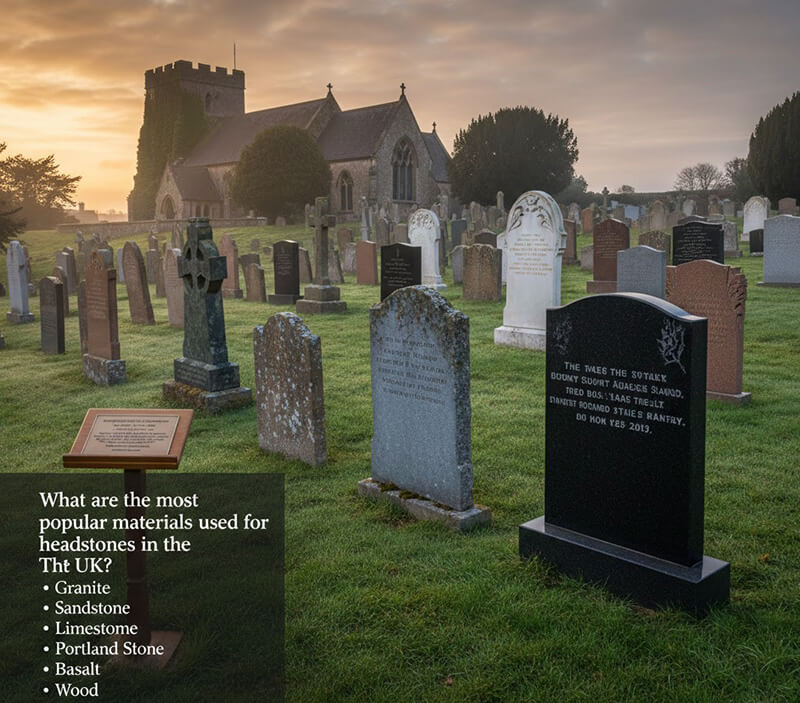
Granite: The Most Popular Choice
Granite has emerged as the material of nearly 75-80% of new memorials in Britain. This igneous rock has formed over millions of years deep in the Earth’s crust, which provides it with exceptional durability for the harsh British weather, which changes quickly and can be severe
The many advantages, especially practical ones, make granite a preferred material for most. Its dense, crystalline structure makes it resistant to frost damage, weathering, and acidic rains—major causes of deterioration on so many old memorials made from softer stones. According to the National Association of Memorial Masons (NAMM), “Granite headstones retain their original appearance and keep engravings for more than a hundred years with little need for maintenance.”
Did you know? After coming to the UK in the 1980s, black granite from India and grey granite from China became very popular. They became familiar sights in local cemeteries, where families could choose them as inexpensive and sturdy granites. However, domestic granite is still in demand, and it is that imported from Scotland, specifically Aberdeenshire, which is prized for its quality and supports local quarrying traditions.
Granites are versatile and also open to interpretations in aesthetic matters. They exist in colours from standard black and grey to pink, red, blue, and even green varieties, permitting some customization while still conveying a certain traditional dignity. Modern laser etching and sandblasting techniques permit the production of much more complicated designs, images, and very detailed inscriptions, which will remain clear and legible for generations.
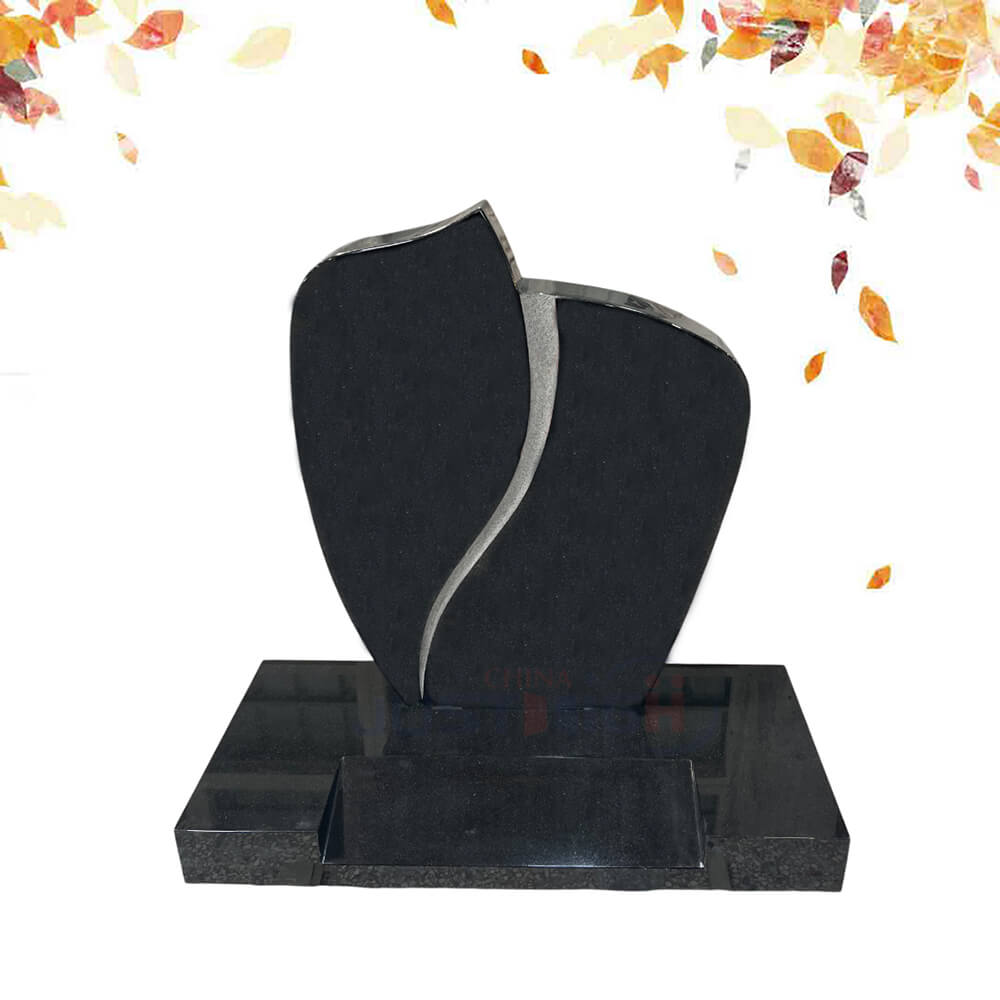
Black Granite Headstone
Marble: Eternal Beauty
Marble represents that classical beauty and has been used for memorials since ancient times—a metamorphic stone prized for its pure white, luminous appearance and fine grain which allows it to be shaped into monuments that exude elegance and inspire reverence. Walking through the older sections of UK cemeteries, there are still sumptuous Victorian marble headstones that have survived beyond 150 years.
However, compared with granite, marble is less durable and thus owing to weathering exposures. CaCO₃ (calcium carbonate), which gives marble its characteristic quality, reacts with acidic rainwater; this causes surface details and inscriptions to erode gradually. Historic England has published research showing that far greater deterioration has occurred in marble memorials located in industrial areas where pollution contributed to the acidification of the rain historically.
Nonetheless, marble is often preferred for memorials indoors, for cremation plaques, and within covered areas that limit weather exposure. Italian Carrara marble remains the best-known standard for it, although equivalent alternatives can be found in Turkey or Greece. Most families settle for using marble in remembrance of purity and its sculptured forms that can be carried into very elaborate structural forms.
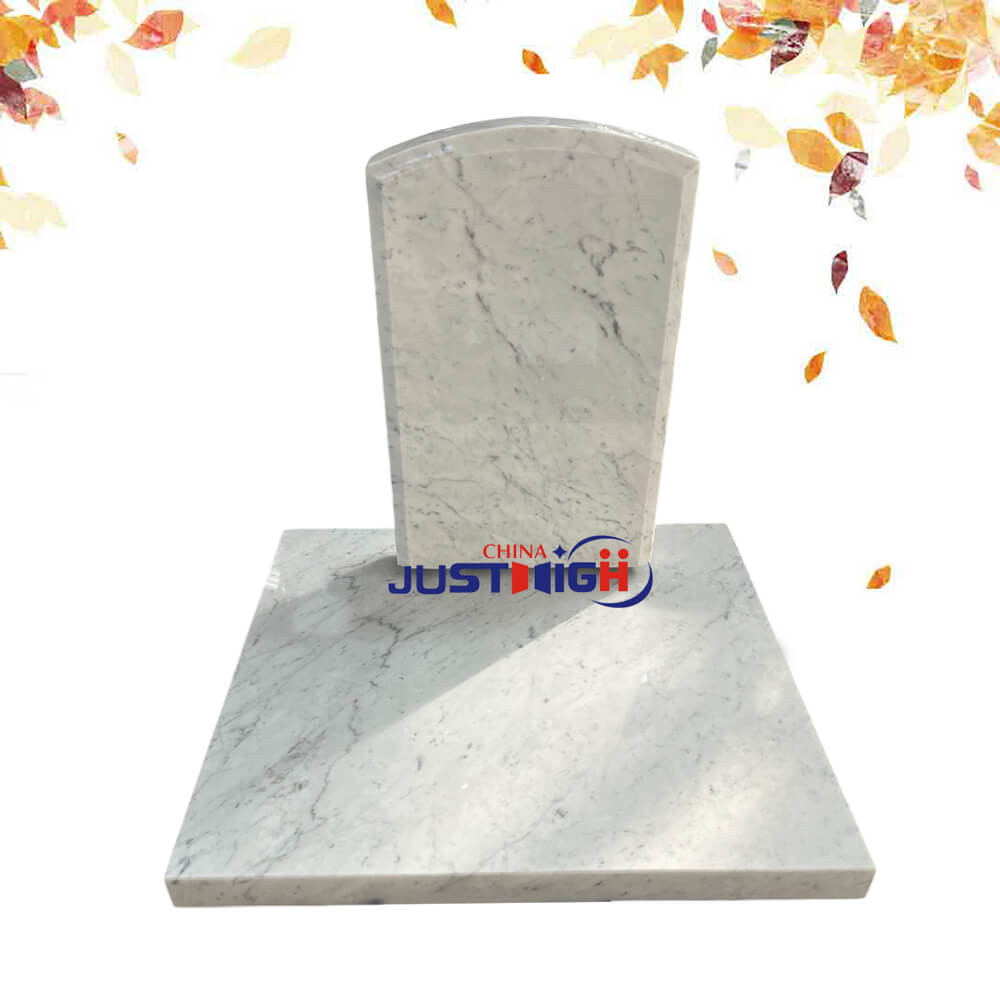
White Marble Grave Stones
Limestone: The Traditional Stone of Britain
Limestone is an integral part of British memorial culture and has been traditionarily the stone of choice for tombs, although recently granite has taken over as the main headstone material. Portland stone from the the Isle of Portland in the southwest of England, along with different oolitic limestones from within the Cotswolds, has served as memorial material in UK churches for centuries, allowing the creation of the characteristic honey-coloured memorials harmoniously blended with historic church architecture.
This sedimentary rock is formed by the deposits of accumulated marine organisms, giving it durability of moderate quality if well maintained. Most church authorities in conservation zones often prefer limestone for new headstones or require the material to ensure visual continuity with current monuments and church buildings. CPRE has advocated for the use of local stone in historic churchyards to maintain the architecture heritage.
Since limestone is much softer, masons can produce really finely detailed carvings and inscriptions using knives, chisels and mallets. Just like marble, limestone weathering requires closer maintenance to prevent early wear. It has been observed that limestone headstones from the 19th century show quite heavy erosion at their surfaces under heavily polluted urban conditions, whereas those already in rural places fare better.
Slate: A Welsh Tradition
Welsh slate represents a distinctive regional tradition manifesting with a particular aesthetic and practical qualities. This fine-grained metamorphic rock largely quarried from Snowdonia is among the best materials, as durable as granite but with a distinctive smooth, dark surface, best for inscriptions.
The layered structure of slate allows it to be split into fairly thin, flat sheets, producing neat, upright memorials of a refined character. Its low porosity is important in terms of its resistance to water absorption and frost damage: both vital benefits in the UK climate. Indeed, geological surveys indicate that with proper installation, memorials in slate might outlast a period of 200 years and beyond with little or no maintenance.
This material has been popular in Wales and northern England for a long while, and has now gotten some popularity throughout the UK due to its understated elegance. The smooth surface takes engraved lettering beautifully, and the dark grey to black colours contrast splendidly for gold or silver leaf inscriptions. Some families prefer the green credentials of slate, as British slate is locally sourced and much more sustainable than imported granite.
Sandstone: Natural Beauties
These bold, warm, natural shades running from cream and buff to pink and red produce memorials with really distinctive characters as well as visual warmth. Sandstone, the sedimentary rock constructed out of compressed sand that formed over millions of years, has traditionally been used for British headstones.
Countless memorials fill the length and breadth of northern England and Scotland from Yorkshire sandstone and varieties from the Midlands. Its relatively soft composition is easily carved, allowing detailed work and empowered well-accomplished masons to enhance the designs of large Gothic-style crosses and Celtic design as well as personalized symbols.
The main problem concerning sandstone is its porosity and susceptibility to erosion effects. Water absorbed into the softer body can easily freeze during winter and eventually damage its structure; this condition has been observed to exhibit erosion in the softer varieties within a period of 50-70 years. Modern sealants and protective treatments significantly enhance sandstone longevity; nevertheless, they still require more maintenance compared to granite. Regular check-ups of sandstone memorials should also be made, as encouraged and advised by ICCM.
Factors Influencing Material Choice
Choosing a material for a headstone means weighing many factors, some of which have little to do with aesthetics. For the majority of families, durability remains the most critical factor—a memorial should stand in honour of the departed for generations and with minimal degradation. Those on whom longevity is uppermost find granite’s proven durability practical.
Cemetery regulations are a significant factor in material choices. Many old churchyards impose strict regulations that a traditional material such as limestone or local stone must be used so as to maintain the heritage character of the place. In conservation areas, materials may require the approval of the local council’s conservation officers (LPA). Most modern cemeteries would permit the use of any approved material for the memorials, thus providing families with more options.
Budget considerations affect material choice significantly. It varies from granite being the most popular to the cheapest depending on the granite’s origin and colour. Chinese and Indian granite would be the most economical, whilst rare colours and Scottish granite are considered more expensive. Generally, this means that marble is more expensive than granite of the usual sort; local variances in the price of limestone and sandstone may reflect local availability.
Environmental consciousness is currently becoming very important in the eyes of many families. Locally quarried stones emit less during transport, whilst granite is extremely durable, resulting in infrequent replacements spread over hundreds of years. Some families also investigate the quarrying practices and working conditions in countries exporting the memorial stone to the UK.
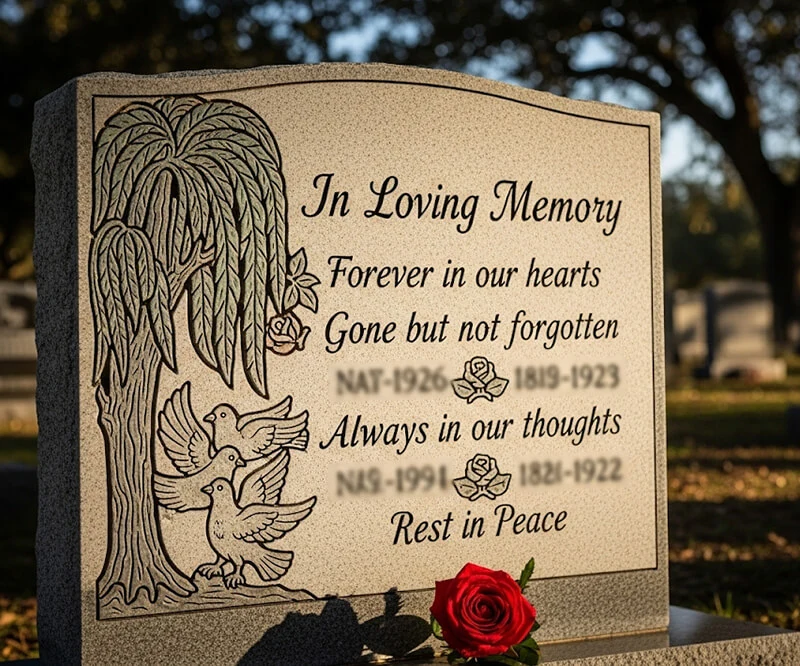
In the end, personal and cultural preferences guide the majority of decisions. Families with Scottish heritage might choose Aberdeen granite, whilst Welsh connections may lean toward slate. Religious traditions sometimes favour particular materials—white marble for its symbolic association with purity or simple stone that embodies values of humility and modesty.
The climate where the memorial is located should play role in the materials chosen. In coastal cemeteries, salt-resistant granite serves well, while the softer stones are allowed in sheltered churchyards. Cities with high pollution levels should have materials that resist the attack of acid rain.
Inscription requirements also matter. Granite accepts laser etching and sandblasted lettering that remains sharp indefinitely. Marble and limestone suit traditional carved inscriptions but may lose clarity over decades. Slate’s smooth surface produces beautiful engraved text that contrasts strikingly with gold or silver leaf.
Working with skilled memorial masons ensures that families understand these factors and make informed choices. Professional support can provide help concerning cemetery regulations, properties of materials, and design options to ensure that thoughtful tributes exist as enduring memorials for lives made dear.
Professional Memorial Craftsmanship
We are professional headstone manufacturers dedicated to creating lasting memorials with exceptional craftsmanship. Our expertise spans all traditional and contemporary materials to ensure your tribute perfectly honours your loved one’s memory for generations to come.