
Why Do Funeral Homes Require Even a Simple Casket for Cremation?
Table of Contents
In death, many families will opt for cremation instead of a burial. The procedure can appear simple to some, yet most funeral homes compel family members to buy a casket or container, creating confusion. The key question is why a body needs a box before it is turned to ash? The answer includes safety, dignity, legal issues, and practical measures that keep both workers and mourners safe.
Safety Reason for the Requirement
The temperature of the cremation chamber is about 1,400 to 1,800 degrees Fahrenheit. Therefore, the workers would not be protected from the body being placed in these chambers. Hence, the container is a barrier between the workers who will handle the body and the body itself.
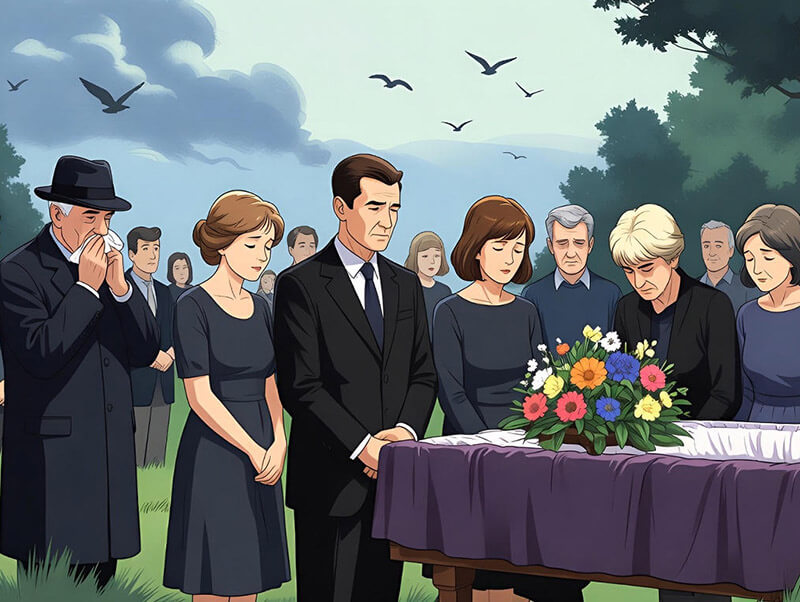
Legal Requirement: Funeral homes are mandated by law to prevent their workers from coming in direct contact with the human remains. The covering does indeed serve in this manner.
After a person dies, bodily fluids seep from the cadaver. Such fluids would leak through a container and cause health hazards. Workers could slip on floors or get in touch with diseases. The system is set so that the woods and container hold everything safe.
An example being from Texas: An example is of Maria Rodriguez, who works in a funeral home in Houston. She explained how her team had received a body without an approved container. The mess was so bad that they had to stop working for two hours to clean and disinfect the whole prep room. The funeral home now does not allow receiving any body without an approved container.
Respect and Dignity for the Deceased
Also, there is respect for every person, even when they are dead. A coffin or container represents the dignity due to a dead body for the last journey. Such a coffin or container prevents the dead body from being exposed to the eye or being conducted in ways deemed disrespectful.
Such activities are viewed by funeral directors as part of their responsibility. Treating every dead body with care is the director’s obligation, so the container helps in maintaining that standard. The knowledge that their loved one is treated with utmost respect until the end gives comfort to families.
There are many cultures and religions that have peculiar thought processes about how to treat the dead. A container would recognize these practices and would provide comfort to families at a very trying time.
Legal Rules and Regulations
Laws indeed differ from state to state and mostly provide for cremation containers. These laws protect public health and safety.
Legal Evidence: CANA provided legal support, saying that 47 states required some form of rigid container for cremation. Only three states allow cremation without any container whatsoever.
In 1984, the Federal Trade Commission (FTC) set forth the Funeral Rule. These regulations state that no funeral home has the right to force a family to buy an expensive casket for cremation. The family can choose a relatively inexpensive cardboard box or an inexpensive wooden one. The funeral home must provide low-end options.
In several states, including California and Florida, implanted laws describe exactly what type of container satisfies the minimum standards. The containers are supposed to be strong to hold the body and fit inside the cremation chamber.
Practical Reasons Regarding Cremation Containers
The cremation procedure has containers that need some explanation. Modern cremation machinery functions at its best when the body lies inside something clean-burning.
Cardboard or wood containers burn steadily. This happens to facilitate monitoring by the crematory officer in terms of temperature and timing. Metal caskets are not to be put inside cremation chambers since they do not burn and will cause damage.
Technical Perspective: The average time for an actual cremation procedure is between 2 and 3 hours. With the burning of the container, the cremation process is initiated unhindered. If there is no container, it would have been a wild guess and hence, prolonging the process.
Containers ease the process of moving the body. The openings to the cremation chambers are also tiny. A hard container slides better into the chamber without putting any strain on the body than moving the body itself without any form of support.
Excursions in Real Life with Families
An understanding of container importance becomes clearer when individuals speak about the process.
James Thompson recalled: After his father died in Portland, Oregon, James Thompson wanted to save whatever money he could. “Is there any way I can get rid of the casket?” he asked the funeral guy. The director advised him that for state law and safety reasons, at the very least a simple container was required. Instead of a $3,000 casket, James bought a cardboard cremation box, which cost $150. He was relieved he could honor his father without going into debt. “I didn’t realize they had such affordable options. The cardboard box worked perfect, and Dad wouldn’t have wanted us to spend thousands anyway.”
Sarah Chen: Sarah is working as a nurse in San Francisco. The family followed Buddhist traditions when the grandmother passed. A simple container needing to completely burn was required. The funeral home provided a plain pine box that worked religiously for the family as well as legally. Sarah noted, “That container gave us some comfort knowing we were doing right by Grandma. It was not fancy, but it was respectful and in accordance with our beliefs.”
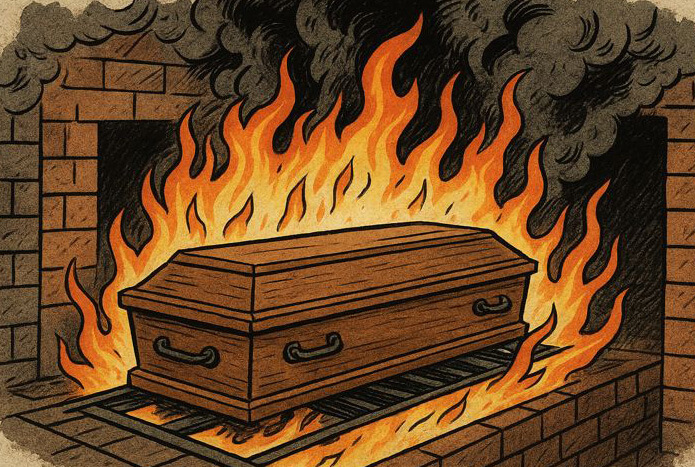
What Options Would Families Have?
Families are not obligated to purchase caskets that cost them dearly for cremation purposes. Rather, they have cheaper options:
Cardboard containers: These run from $50 to $200. They comply with all legal requirements and burn cleanly. Many funeral homes have lovely decorated cardboard boxes for the viewings.
Unfinished wood boxes: Pine or plywood simple containers cost $150 to $400. It gives more structure than cardboard and is satisfactory for any family that wishes to have a brief viewing before cremation.
Rental caskets: A few funeral homes permit rental caskets for viewing or service. The body goes in a liner. Afterward, the liner and cremation container are taken by the funeral home. The rental casket could be used for another service. Costs for rental caskets are between $800 and $1,500 with arrangements far cheaper than buying a casket.
Another option for the containers: Inventive families might have some designs made out of wicker baskets, bamboo, or other biodegradable materials. These must respect which might be different from place to place, but they offer exciting and eco-friendly alternatives.
Money-Saving Tip: Due to the FTC regulations, all funeral homes must accept caskets from vendors who are not affiliated with them. In fact, a family may purchase one from Walmart, Costco, or any online store for a lot less than what the funeral home might charge.
Conclusions
Funeral homes require caskets or containers for cremation keeping in mind safety, respect, legislature, and practicality. Workers have some health risks to contend with. The dignity of the deceased must always be honored. State and federal laws are meant to set minimum standards. The cremation machinery is always more effective with right containers.
People will, however, find families do have options. No one has to pay for the expensive casket for an incineration. Simple, inexpensive containers fulfill requirements and can equally honor someone. Knowledge of the above reasons can help families to properly weigh their decisions in trying times.
At first, this might seem like an extra cost, but it really serves a purpose. It guards the worker, respects the dead, obeys the law, and ensures smooth running of the cremation. The whole reason behind the requirement becomes crystal clear!