
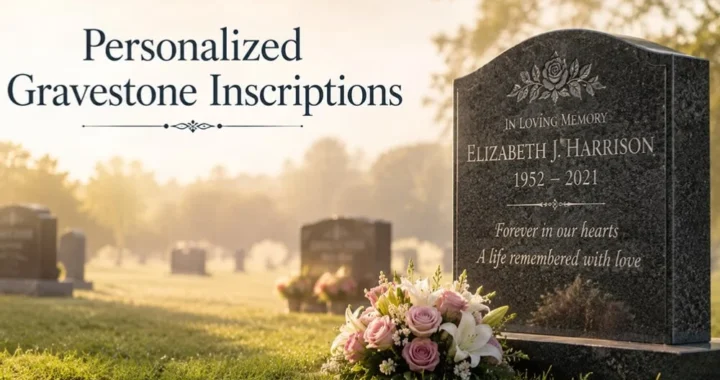
What Can I Write on a Headstone Instead of “In Loving Memory”?
Walk through almost any cemetery or churchyard in the UK and you will see the words “In Loving Memory” carved into many headstones.
There is nothing wrong with the phrase. It has been used for generations because it is simple and heartfelt. But after helping families choose memorial wording, we often hear the same question:
“Can we put something a little more personal?”
The answer is yes.
A headstone does not have to follow one traditonal form. The best inscription is often the one that sounds like the person being remembered.
Simple Alternatives That Work Well on British Headstones
Many families prefer short wording because it sits well on a lawn memorial and remains easy to read.
Popular alternatives include:
- Forever in Our Hearts
- Always Loved, Never Forgotten
- Remembered with Love
- Forever Loved
- Rest in Peace — R.I.P.
- Until We Meet Again
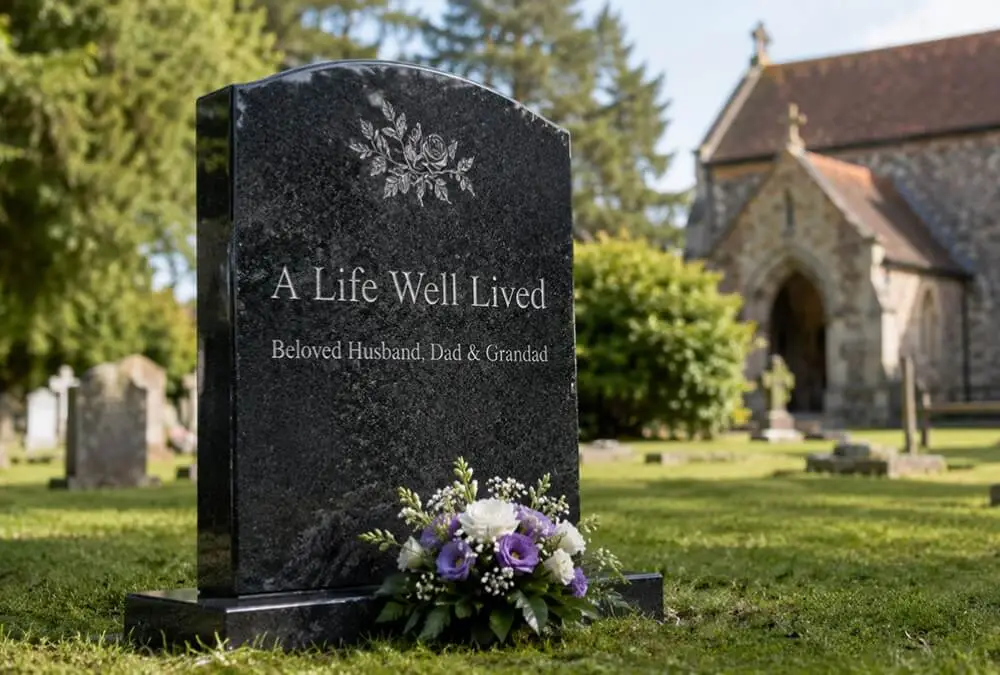
- A Life Well Lived
- Loved Beyond Words
- Always in Our Thoughts
- Simply the Best
A family might choose:
“Forever in Our Hearts — A Dear Mum, Nan & Friend.”
Another may use:
“A Life Well Lived — Beloved Husband, Dad & Grandad.”
These words feel familiar without sounding too formal.
Dates are often kept simple too, using DOB and DOD during the design stage, although the full dates are normally carved on the finished memorial.
Make the Inscription Sound Like Them
Some of the nicest memorials we see are not the ones with the longest poems. They are the ones that make you picture the person.
We once saw wording chosen for a keen gardener:
“Forever Among the Flowers.”
For someone who loved the coast, a family chose:
“Gone to Watch the Tide Come In.”
A family remembering a lifelong football supporter might choose:
“One Club. One Life. Forever Remembered.”
These are small details, but they make a memorial feel human.
Religious wording is also common across the UK. Some families choose Ps. 23, Jn. 11:25, a short prayer, or simply “At Rest with God.” Others prefer no religious reference at all.
There is no single right approach.
Check the Cemetery or Churchyard Rules
Before finalising an inscription, it is worth checking the local regulations.
In the UK, cemetery and churchyard authorities can have rules covering headstone size, material, finish, lettering, symbols and even the type of memorial permitted.
A local memorial mason can usually help with these requirments and prepare a layout before the stone is carved.
This matters because a sentence that looks fine on paper may feel crowded on a smaller memorial.
For example, an approx. 2 ft 6 in lawn headstone has far less lettering space than a larger kerb set.
Always check names and dates as well. It sounds obvious, but a familly name, date or middle initial can be easy to miss during an emotional time.
You Do Not Need to Sound Formal
British headstones have changed over the years. Families now feel more comfortable choosing words that reflect everyday life.
“Mum” can feel warmer than “Mother.”
“Dad” may sound more natural than “Father.”
A nickname can sometimes mean more than a full formal name.
If someone was known for Sunday roast, terrible jokes, walking the dog down the same Rd., or never missing their local club’s home match, those memories are part of who they were.
You do not have to fit a whole life onto one stone.
Choose a few words that feel sincire.
“In Loving Memory” will always have its place, but “Forever in Our Hearts,” “A Life Well Lived,” or a phrase your own family remembers may feel more personal.
A good memorial does not need clever words.
It just needs words that feel like them.