
📋 Table of Contents
A Place to Remember People
A monument serves as a memory aid for people who have died. It offers relatives a spot to go to and reflect on their dear ones. A lot of them decorate the monument with flowers, trinkets, or written expressions. Some choose to spend time in its proximity, reminiscing about the past.
In France, families commonly visit graves during All Saints’ Day (La Toussaint). They tidy up the grave and put flowers next to the stone. Similarly, in Japan, visiting family graves during Obon is a custom. These acts of visiting the graves enable people to stay in touch with their parents, grandparents, and friends.
A monument may even be an expression of love and honor. Most of the time, it is the stone that carries the names, dates, and brief messages. A number of them are adorned with flowers, birds, hearts, or religious symbols. These are a person’s life story on a stone.
A Record of History
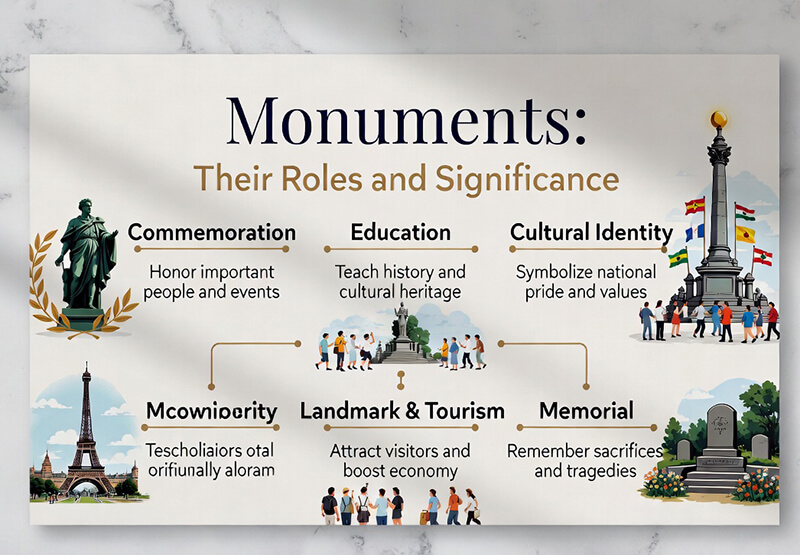
Besides marking points in history, monuments also function as reminders of significant moments. Cities or nations erect monuments following wars, accidents, or natural disasters. Such places allow people to get acquainted with history and thereby shed light on the past.
For instance, there are memorials of World War II in various European countries. Often schools organize educational trips to these sites. Teachers use their knowledge of history not only to educate the students but also to tell the story of soldiers who died in the war.
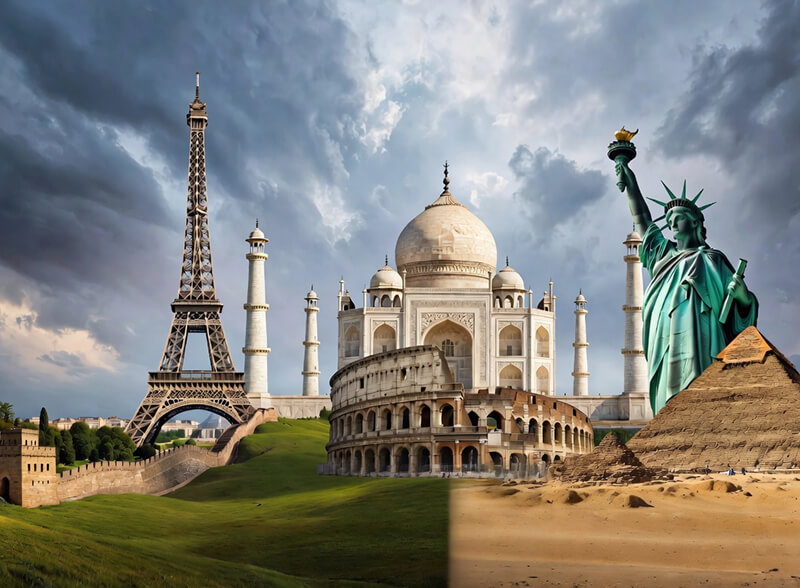
The Taj Mahal in India is another example. Emperor Shah Jahan constructed it as a token of his love for his deceased wife. It is a destination that appeals to millions every year. It is on the UNESCO World Heritage list, which means it is a monument of great cultural significance.
A Symbol of Culture and Faith
Monuments are a great way of expressing culture and faith. Since styles, stones and carvings differ from one country to another, different countries use different methods of monuments. Some people opt for crosses while others prefer angels, trees or even simple shapes.
Marble monuments are the norm in many parts of Italy. Granite is very strong and durable and can last with basic care for a very long time, so it is an excellent choice in areas where the weather is cold. Stone experts say granite can withstand the effects of climate for decades with just minimal care. For this reason, it remains a very popular choice as a material for cemetery monuments.
Some families also like to put personal items on the monument. A monument can have a photograph, a poem, or a quote that someone likes. These little details give the monument a unique feel.
A Spot for Restoring Oneself
Right after a loss, people may experience sorrow and suffering. A monument could be of great assistance at such a time. It provides people with a peaceful spot where they can reflect and get better.
Some even make a point of visiting on their birthdays or anniversaries. Visiting a monument is their way of honoring a memory and coping with the loss.
🌸 Maria from Spain pays a visit to her father’s monument once a month. She takes flowers with her and tells her father stories about her children.
🍃 Kenji from Japan cleans the family monument together with his brothers every summer. Such small acts are a means of keeping family bonds alive.
Research from grief support groups have revealed that memorial visits are one way by which people can open up and express their emotions and at the same time alleviate stress. Thus, the monument, which is just a stone, is slowly being made a part of one’s family life.
Why Are Monuments Still Important?
Monuments are seen by some as nothing more than relics of the past. However, many families still decide on monuments even today.
To keep a name alive, a monument is a perfect medium that renders the individual visible not only for the present but also to the coming generations. In other words, it safeguards stories, history, and love.
Indeed, modern monuments have moved up a notch by adding QR codes, laser carvings, and custom art as part of the package. Nevertheless, the chief function of a monument remains the same. Through a monument, individuals can remember, honor, and connect to one another.
To some people, a monument may be seen as mere stone. However, to them, it is just a symbol of memory, care, and human connection.