
Why Do Jews Use the Back of the Shovel to Fill in a Grave?
A look at one of Judaism’s most deeply human burial customs — and what it reveals about how we grieve.
📑 Table of Contents
The Tradition in a Nutshell ✓ Fact
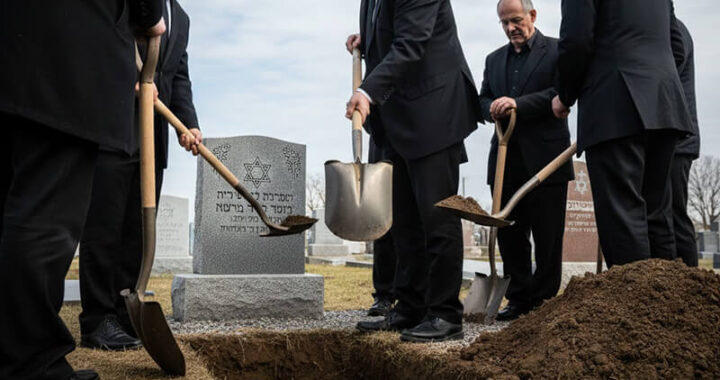
At a traditional Jewish funeral — known as a levayah — it is customary for mourners to participate in filling the grave with earth. This isn’t delegated to gravediggers or cemetery staff. It is considered one of the highest acts of kindness in Judaism, a mitzvah, because the deceased can never repay the favor.
What makes this ritual stand out to outsiders is one specific detail: mourners often use the back of the shovel — the flat, rounded side — to drop the first shovelfuls of dirt onto the aron. It looks unusual. It looks deliberate. And it is both.
Why Use the Back of the Shovel? ✓ Fact
There are two widely accepted reasons, rooted in both emotion and theology.
1. To express reluctance and sorrow. Using the back of the shovel is an act of symbolic protest. You are burying someone you love — no one does this willingly. The inverted shovel says, in wordless body language: “I do not want to do this.” As one rabbi explained at a graveside ceremony, the first shovel is turned upside down to signify reluctance, and the second is turned right side up, to indicate acceptance of a reality that cannot be changed.
2. To mark this as sacred, not ordinary labor. Shoveling dirt is normally everyday work — digging a garden, moving earth on a const. site. Flipping the shovel signals that this task is fundamentally different. It is holy work. It is not labor; it is love.
The shovel is held so that the back faces upward, to show that it is being used for a purpose that is the opposite of life, and that it also takes time — showing our reluctance to bury a loved one.
— Sinai Memorial Chapel, Jewish Traditions Regarding Death
Real Stories: How It Feels in Practice
Many people who have attended a Jewish funeral describe the moment as one of the most emotionally raw of their lives — not despite the ritual, but because of it.
Paul’s family — described in a personal account by a close friend — experienced this firsthand. At the graveside, the rabbi guided the mourners: each person would place two shovelfuls of dirt on the coffin. The first, with the shovel inverted. The second, right side up. Paul’s six-year-old daughter took the shovel from the rabbi’s hand. His ten-year-old lifted it and shoveled the dirt on her own. A friend later said, “The hardest part is the sound of dirt against the coffin.”
Rabbi Aron Moss, of the Nefesh Community in Sydney, AUS, has noted that the soul of the departed is believed to derive comfort from being laid to rest by those who love them — not by strangers. The act matters as much to the dead as it does to the living.
For some families, the ritual is so emotionally difficult that they request the coffin be placed in the grave before they arrive. Some drop flowers instead of earth, especially when young children are among the mourners. Most rabbis gently discourage this, because the physical act — painful as it is — helps grief begin its work.
It’s Not Just the Shovel ✓ Fact
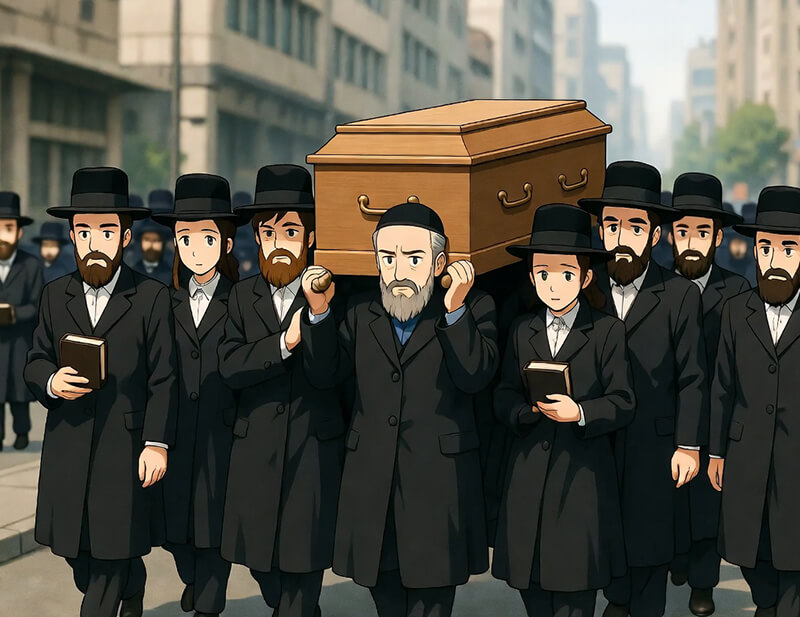
The reversed shovel is only one layer of a carefully constructed ritual. Several other customs accompany the burial.
Three shovelfuls of dirt. The number 3 holds deep significance in Torah law. Each mourner traditionally places three shovelfuls into the grave — not one, not two.
The shovel is not handed from person to person. After one mourner finishes, the shovel is placed back into the earth. The next person picks it up themselves. This custom reflects the belief that halacha does not permit passing objects between people at a funeral. On the day of death, no one is above another. Handing a shovel implies a hierarchy; placing it in the ground erases it.
The grave must be fully covered. The burial is not considered complete — and the aninut mourning period does not officially begin — until the grave is filled. This is not symbolic. It is a legal requirement under burial halacha.
The Deeper Meaning Behind the Ritual
Jewish burial customs are not designed to make grief easier. They are designed to make grief real.
The neshama — the soul — is believed to linger near the body in the days following death. Having loved ones perform the burial honors this presence and provides comfort to the soul as it transitions to the next world.
At the same time, the ritual serves the living. By requiring mourners to physically participate — to hold the shovel, to feel the weight of the earth, to hear it land — Judaism ensures that denial is not an option. Grief, in this tradition, is not something to be managed around. It is something to be moved through.
Rabbi Ted Falcon, a writer based in the US, has written that the Jewish funeral is structured so that mourners recognize the reality of death — and in doing so, find the first foothold toward healing.
A Small Act, A Lasting Impact
Flipping a shovel upside down takes one second. But in that one second, a mourner says everything words cannot: I loved you. I didn’t want this. And I am here, honoring you, one handful of earth at a time.
It is one of the most human things about Judaism’s approach to death — a religion that, for all its theology and law, never forgets that grief is, at its core, about people. About the ones we carry with us long after the grave is filled.
Vist more: https://www.justhighstone.com/blog