
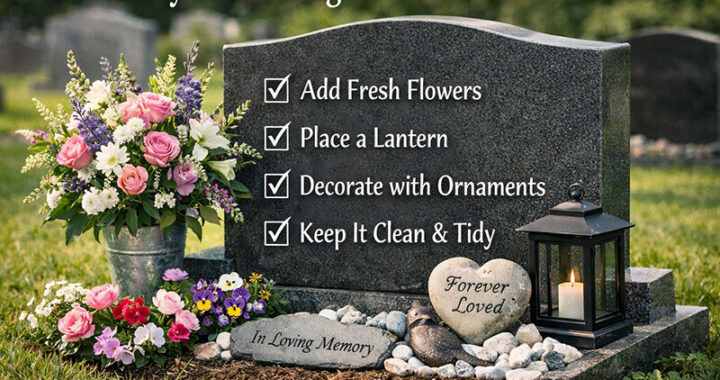
How Do You Make a Gravestone Look Nice?
Table of Contents
Caring for gravestones has long been a way of honoring the memory of loved ones after they pass. Over the years, weather conditions, growth of microorganisms, and surroundings degrade a memorial’s beauty.Yet with appropriate maintenance and care, it is possible to restore the dignity and beauty of old gravestones. for generations to come.
Regular Cleaning and Maintenance
Gentle and regular cleaning forms the core of stone care. According to the AIC (American Institute for Conservation), about 80% of damages to a monument result from improper cleaning techniques rather than from natural weathering. The right approach protects and enhances the appearance of the stone.
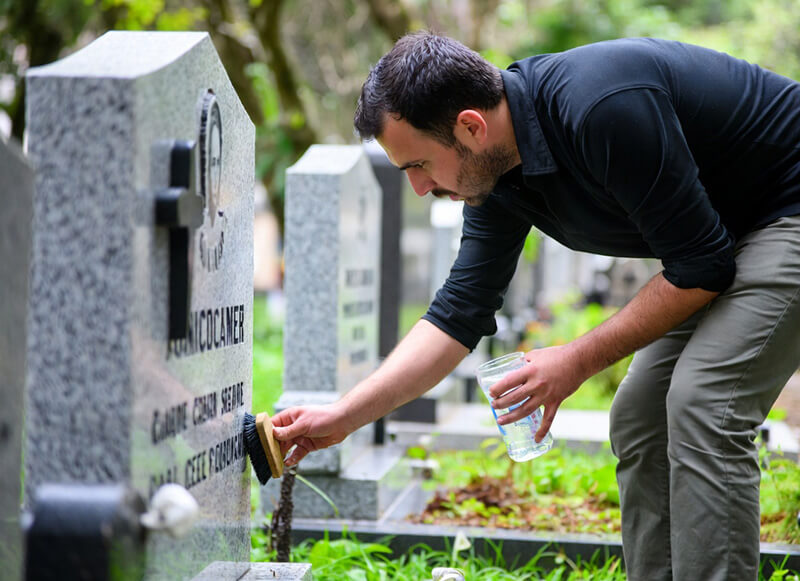
First, identify the gravestone material-granite, marble, limestone, or sandstone, as they need different care. For most gravestones, use only water and a soft-bristle brush. Mix distilled water with a little non-ionic detergent (pH-neutral soap) for stubborn stains. The NPS (National Park Service) recommends D/2 Biological Solution, a specialized cleaning product that has been thoroughly tested on thousands of historic monuments.
⚠️ Important Fact: Bleach, household cleaners, and pressure washers should never come into contact with a gravestone. A study by the Association for Gravestone Studies indicated that use of harsh chemicals has resulted in irreversible damage to as many as 67% of tested memorial stones and has accelerated the deterioration process of stones by as much as 15 years.
When cleaning, always work from the bottom upward using gentle circular strokes in gentle circular strokes to avoid streaking. Rinse with clean water and let it air dry. You can clean granite stones 2-3 times a year because they are more durable, while softer stones such as marble or sandstone should be cleaned only once a year to prevent wear.
Removing Stains and Biological Growth
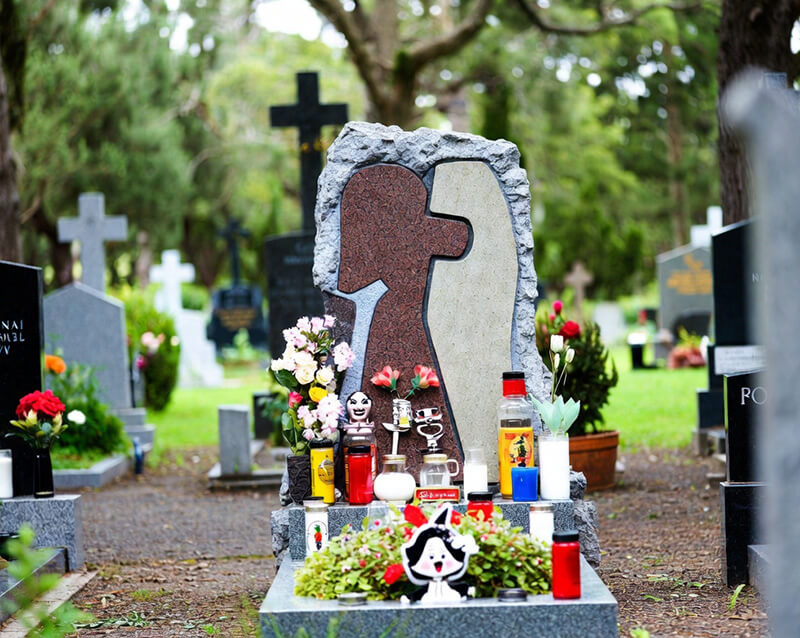
It is chiefly lichens, mosses, and algae that grow on gravestones in humid areas, although they are usually perceived to be attractive. Often they trap moisture and cause damage when growing in excess. Research by the Association for Preservation Technology (APT) indicates that lichen can penetrate stone surfaces by up to 2 mm, contributing to microfracturing.
Remove biological growth by scrapers made of wood or by hand, never by metal, as metals give scratches on the surface. On the other hand D2 Biological Solution promises to deal with persistent growths by being left to operate within a few weeks. The environmentally safe product further states that it breaks down organic matter, leaving the stone unharmed. In fact, A 2019 study concluded that this approach removed adequately over 85% of lichen colonies within a 6-week duration without creating surface erosion.
Rust stains develop from a metallic part or fence around it, and thus going to a conservator is prudent. Usually, a nonprofessional will create a further problem by expanding the staining deep down inside porous stone. Water stains and mineral deposits appropriately respond to soft wash with distilled water and patience-acidic solutions do etch the surface.
Repair and Restoration Techniques
Minor repairs improve the gravestones appearance greatly. But for major restorations, it would be best to call professionals. Experts in cemetery preservation estimate that about 30% of gravestones older than a hundred years requires some form of structural stabilization.
Never try to reset loose or tilted stones yourself, unless you know exactly what you are doing. Generally, incorrect resetting can damage further or provide safety hazards to others. Professional conservators use specialized epoxies and pinning techniques that accommodate ground movement and freeze–thaw cycles. According to NCPTT (National Center for Preservation Technology and Training) guidelines, properly reset stones provide a 95% stability rate for 20 years.
Small chips or cracks may sometimes be repaired with suitable stone repair compounds, but special consideration must be given to color matching and material compatibility. Modern conservation ‘ethics’, as defined by ICOMOS’ (International Council on Monuments and Sites), are such as, that repairs must be reversible and distinguishable from original material on close inspection.
Landscaping Around the Grave Marker
How the area surrounding a gravestone is designed has a heavy bearing in its visual attractiveness and its enduring preservation. Dignity is what comes from proper landscaping, while protection from damage happens because the monument is isolated.
Trim the grass often around the base but do not let either the lawn mower blades or weed trimmers come into contact with the stone. Research by cemetery management studies has shown that mechanical damage from a maintenance tool accounts for 40% of all new chips and scratches on a gravestone, thus creating a tiny border of either mulch or gravel surrounding the stone; it creates a 6-inch buffer zone that prevents accidental impacts while reducing weed growth.
Plant selection matters significantly. Plant nothing within 10 feet of any gravestone, particularly trees, because roots shift foundations while fallen limbs hurl destructive damage. Ground-hugging perennial flowers, such as hostas, ferns, or sedum, bring color without demanding care. According to landscape architects with specialty in cemetery design, properly planned plantings yield up to 60% less movement of monuments than bareground.
Think of seasonal flowers in temporary containers instead of permanent planting right against the stone. This has the advantage of flexibility and avoids disturbance of the root systems, which are not going to destabilize the monument but will still make it pleasant to look at.
Seasonal Care and Protection
Every season carries its own peculiar problems as far as gravestone preservation is concerned. Variation in the temperature between freezing and thawing during winter causes most physical damage in the structure while the summer sun fades some types of stone and accelerates biological growth.
Before winter, remove all litter from the stone surface and surrounding area-really good to do, as moisture that freezes can cause spalling-the term spalling refers to the stone surface flaking away. According to the Geological Society of America, water-saturated stone experiencing freeze-thaw cycles deteriorates five to ten times faster than their cousins in the dry state.
In spring, check for winter damage and remove the leaves and organic debris. The ideal time for cleaning is at the annual-cleaning moment in springtime. Maintenance for the summer involves cutting vegetation and keeping an eye out for insects since some, such as carpenter bees, can build nests within old stone parts. In fall, do preparation for the approaching dormant season by cutting down surrounding plants and having great drainage around the base of the monument.
For especially valuable stones or apparently fragile ones, in cases of very harsh climates, the possibility of shielding them with temporary covers at times of extreme weather may be warranted. However, these caps must also allow air to circulate to avoid condensation damage.
When to Seek Professional Help
It is great if some maintenance works can be done by an individual, but sometimes it requires professional intervention, as in timely calling a conservator saves costs and helps avoid irreversible damage.
An indication for professional assistance may include the case of having structural instability, extensive biological growth, or penetration by the stone; previously done bad repairs; stones made from rare or unknown materials; significant monuments in history; or damage caused by vandalism. Personalized conservators have advanced tools and materials, as well as techniques that are not typically available to the public.
The AIC has a directory of conservators who have been certified in stone preservation. Professional services range between $500-$5,000, depending on how extensive the work is, but this insures any irreplaceable mementos. Grave preservation organizations indicate that gravestones that have been maintained professionally survive up to 50-100 years longer than amateur-maintained ones.
Ask for training certification and references and probably even ask to get pointed toward structures the conservator has worked on, as well as conservation standards, before hiring them. When really professional, always advise the least invasive method and always document with proper documentation.